Retired Green Beret officer issues a WARNING!

On X

As a former Special Forces Warrant Officer with multiple rotations running counterinsurgency ops—both hunting insurgents and trying to separate them from sympathetic populations—I’ve seen organized resistance up close. From Anbar to Helmand, the pattern is familiar: spotters, cutouts, dead drops (or modern equivalents), disciplined comms, role specialization, and a willingness to absorb casualties while bleeding the stronger force slowly.

What’s unfolding in Minneapolis right now isn’t “protest.” It’s low-level insurgency infrastructure, built by people who’ve clearly studied the playbook.

Signal groups at 1,000-member cap per zone. Dedicated roles: mobile chasers, plate checkers logging vehicle data into shared databases, 24/7 dispatch nodes vectoring assets, SALUTE-style reporting (Size, Activity, Location, Unit, Time, Equipment) on suspected federal vehicles. Daily chat rotations and timed deletions to frustrate forensic recovery. Vetting processes for new joiners. Mutual aid from sympathetic locals (teachers providing cover, possible PD tip-offs on license plate lookups). Home-base coordination points. Rapid escalation from observation to physical obstruction—or worse.

This isn’t spontaneous outrage. This is C2 (command and control) with redundancy, OPSEC hygiene, and task organization that would make a SF team sergeant nod in recognition. Replace “ICE agents” with “occupying coalition forces” and the structure maps almost 1:1 to early-stage urban cells we hunted in the mid-2000s.

The most sobering part? It’s domestic. Funded, trained (somewhere), and directed by people who live in the same country they’re trying to paralyze law enforcement in. When your own citizens build and operate this level of parallel intelligence and rapid-response network against federal officers—complete with doxxing, vehicle pursuits, and harassment that’s already turned lethal—you’re no longer dealing with civil disobedience. You’re facing a distributed resistance that’s learned the lessons of successful insurgencies: stay below the kinetic threshold most of the time, force over-reaction when possible, maintain popular support through narrative, and never present a single center of gravity.

I spent years training partner forces to dismantle exactly this kind of apparatus. Now pieces of it are standing up in American cities, enabled by elements of local government and civil society. That should keep every thinking American awake at night.

Not because I want escalation. But because history shows these things don’t de-escalate on their own once the infrastructure exists and the cadre believe they’re winning the information war.

We either recognize what we’re actually looking at—or we pretend it’s still just “activism” until the structures harden and spread.

Your call, America. But from where I sit, this isn’t January 2026 politics anymore.
It’s phase one of something we’ve spent decades trying to keep off our own soil.
12:03 PM · Jan 25, 2026 15.7M Views

A reply from Emergent Perspective
@emergent

Excellent post.
Two things I’d like to add:
1) As the old WW2 bomber pilot saying goes “If you’re catching flak 💥, you’re over the target.” The enemy doesn’t employ this level of resources, unless there’s something to protect. There is a massive fraud and money laundering ring in Minneapolis, with ties to the Governor, his inner circle, and likely Democrat elites.
2) My mentor when I was in the military, was a retired LtCol who did 5 tours in Vietnam. He wrote much of the U.S. Army’s original COIN (Counterinsurgency) doctrine, from real experience on the ground, fighting the Viet Cong. What’s going on in Minnesota sounds just like his stories about that era. There were infiltration forces secretly running most of the towns in South Vietnam. You’d have a “legitimate,” above-ground government, that would greet the American forces, and pretend to be friendly. Then, you’d have the “shadow” government, hiding in the tunnels underneath the town, holding everybody else’s wives and children hostage, forcing them to play along. Those guys actually ran the show, hiding behind the “innocent” civilians, who they would TRY to get into conflict with our forces – it bolstered their recruiting efforts. It took a long time for U.S. forces to figure out what was really going on, and towards the end of the war, they started finding these guys and rooting them out, which wasn’t difficult once you knew their tactics and doctrine. But, it cost a lot of lives (and innocence) to learn those lessons. As terrifying as that is, this is what we are facing now, on our own soil. It’s going to be a trial by fire 🔥, no matter how it ends up.

15.7M Views
Voter ID requirements and the 2024 USA Presidential Election results

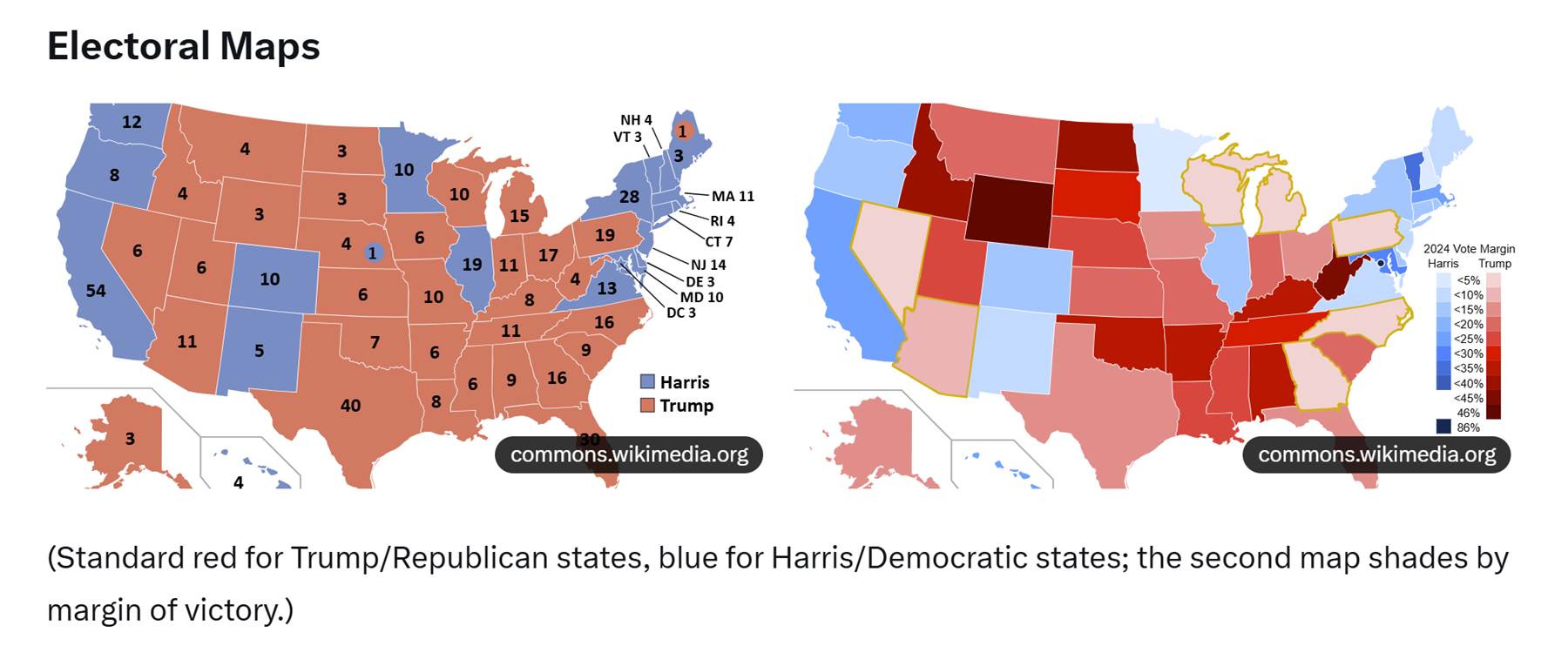
The most recent U.S. presidential election was held on November 5, 2024, between Republican Donald Trump (with running mate JD Vance) and Democrat Kamala Harris (with running mate Tim Walz). Donald Trump won the election, securing 312 electoral votes to Harris’s 226 (out of 538 total). There were no reported faithless electors.

en.wikipedia.org +1

Electoral Maps

commons.wikimedia.org

commons.wikimedia.org

(Standard red for Trump/Republican states, blue for Harris/Democratic states; the second map shades by margin of victory.)State-by-State Results Maine and Nebraska allocate electoral votes by congressional district (plus 2 statewide), resulting in splits. All other states award all electoral votes to the statewide winner. Data is final and certified.

en.wikipedia.org

State/DistrictWinnerElectoral VotesTrump %Harris %Margin
AlabamaTrump964.57%34.10%+30.47%
AlaskaTrump354.54%41.41%+13.13%
ArizonaTrump1152.22%46.69%+5.53%
ArkansasTrump664.20%33.56%+30.64%
CaliforniaHarris5438.33%58.47%+20.14%
ColoradoHarris1043.14%54.13%+10.99%
ConnecticutHarris741.89%56.40%+14.51%
DelawareHarris341.79%56.49%+14.70%
District of ColumbiaHarris36.47%90.28%+83.81%
FloridaTrump3056.09%42.99%+13.10%
GeorgiaTrump1650.72%48.53%+2.19%
HawaiiHarris437.48%60.59%+23.11%
IdahoTrump466.87%30.38%+36.49%
IllinoisHarris1943.47%54.37%+10.90%
IndianaTrump1158.58%39.62%+18.96%
IowaTrump655.73%42.52%+13.21%
KansasTrump657.16%41.04%+16.12%
KentuckyTrump864.47%33.94%+30.53%
LouisianaTrump860.22%38.21%+22.01%
Maine (Statewide + CD1)Harris3~41%~56%Harris overall
Maine CD2Trump153.50%44.46%+9.05%
MarylandHarris1034.08%62.62%+28.54%
MassachusettsHarris1136.02%61.22%+25.20%
MichiganTrump1549.73%48.31%+1.42%
MinnesotaHarris1046.68%50.92%+4.24%
MississippiTrump660.89%38.00%+22.89%
MissouriTrump1058.49%40.08%+18.41%
MontanaTrump458.39%38.46%+19.93%
Nebraska (Statewide + CD1 + CD3)Trump4~63%~35%Trump overall
Nebraska CD2Harris146.73%51.32%+4.59%
NevadaTrump650.59%47.49%+3.10%
New HampshireHarris447.87%50.65%+2.78%
New JerseyHarris1446.06%51.97%+5.91%
New MexicoHarris545.85%51.85%+6.00%
New YorkHarris2843.31%55.91%+12.60%
North CarolinaTrump1650.86%47.65%+3.21%
North DakotaTrump366.96%30.51%+36.45%
OhioTrump1755.14%43.93%+11.21%
OklahomaTrump766.16%31.90%+34.26%
OregonHarris840.97%55.27%+14.30%
PennsylvaniaTrump1950.37%48.66%+1.71%
Rhode IslandHarris441.76%55.54%+13.78%
South CarolinaTrump958.23%40.36%+17.87%
South DakotaTrump363.43%34.24%+29.19%
TennesseeTrump1164.19%34.47%+29.72%
TexasTrump4056.14%42.46%+13.68%
UtahTrump659.38%37.79%+21.59%
VermontHarris332.32%63.83%+31.51%
VirginiaHarris1346.05%51.83%+5.78%
WashingtonHarris1239.01%57.23%+18.22%
West VirginiaTrump469.97%28.10%+41.87%
WisconsinTrump1049.60%48.74%+0.86%
WyomingTrump371.60%25.84%+45.76%

Trump won 31 states + ME-2 (total 312 EVs). Harris won 19 states + DC + NE-2 (total 226 EVs).

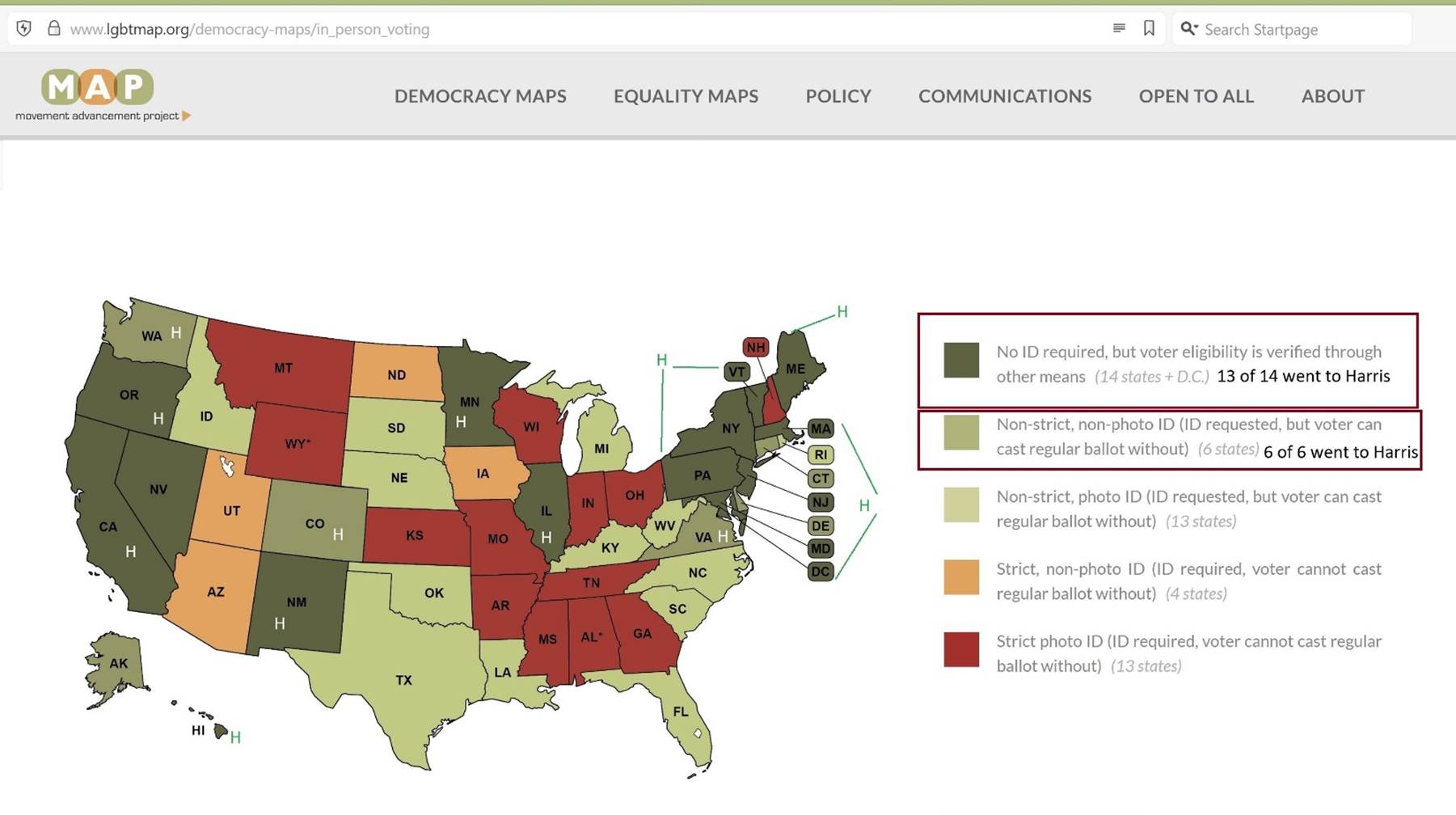
As of January 2026, voter ID requirements for in-person voting vary across US states. Reliable sources like the National Conference of State Legislatures (NCSL) and the Movement Advancement Project (MAP) indicate that 36 states require or request some form of identification, while 14 states do not require any ID (voters are typically verified by signature or other information).States that DO NOT require any voter ID

  • California
  • Hawaii
  • Illinois
  • Maine
  • Maryland
  • Massachusetts
  • Minnesota
  • Nevada
  • New Jersey
  • New Mexico
  • New York
  • Oregon
  • Pennsylvania
  • Vermont

States that DO require some form of voter ID All other 36 states (requirements range from non-strict/non-photo ID to strict photo ID).Note: Laws are nuanced—”non-strict” means ID is requested but alternatives (like signing an affidavit) allow voting without it, while “strict” means no regular ballot without acceptable ID.For visual maps:

These sources provide the most up-to-date visualizations and details, as laws can have minor variations in classification.

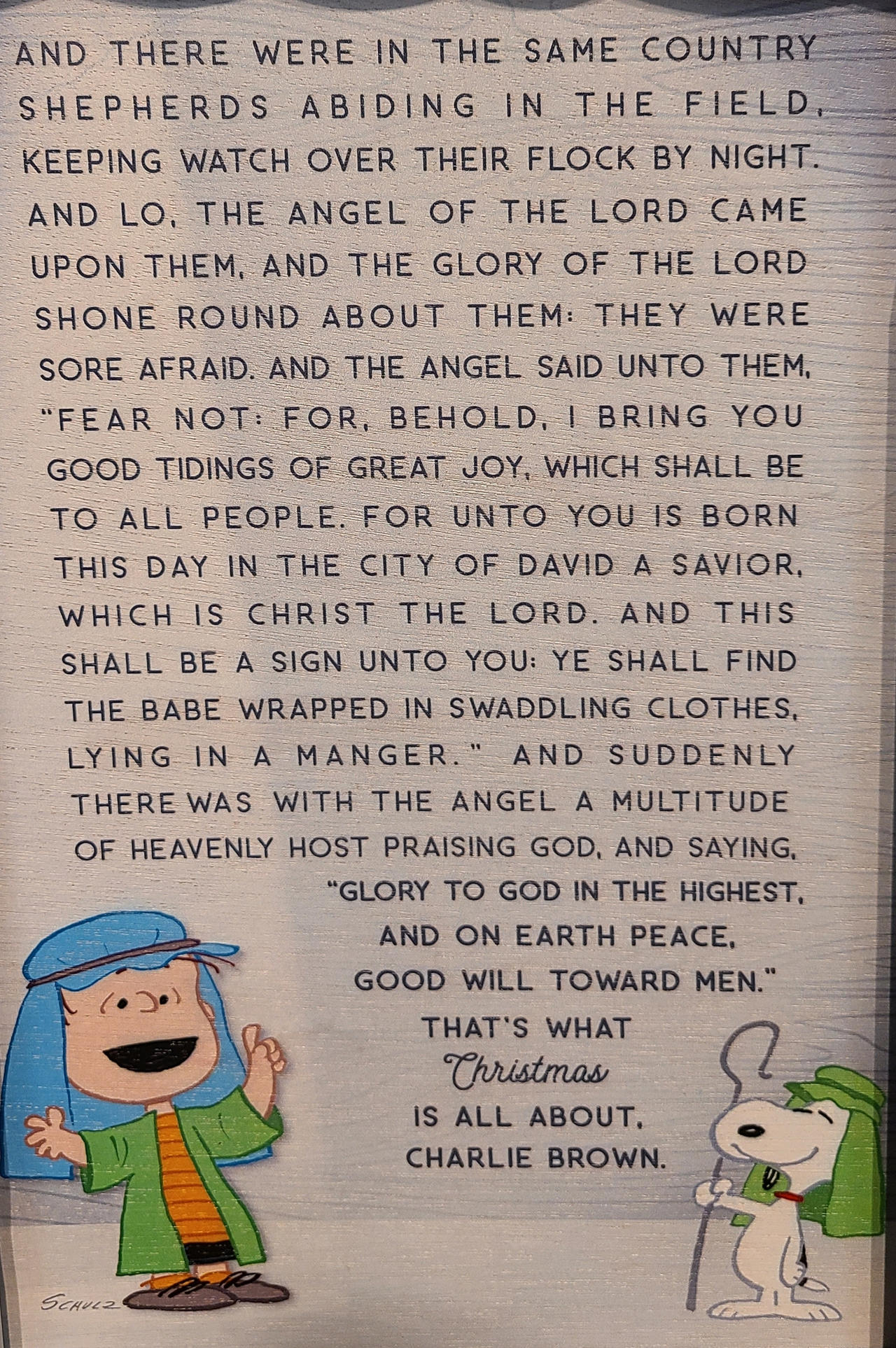
A Savior which is Christ the LORD

John 3:15-18  That whosoever believeth in him should not perish, but have eternal life.  (16)  For God so loved the world, that he gave his only begotten Son, that whosoever believeth in him should not perish, but have everlasting life.  (17)  For God sent not his Son into the world to condemn the world; but that the world through him might be saved.  (18)  He that believeth on him is not condemned: but he that believeth not is condemned already, because he hath not believed in the name of the only begotten Son of God.

depitalism rears its ugly head

Americans Charged $1 Billion to Buy Now Pay Later Platforms over Black Friday and a society continues to find it acceptable to spend more than they have and/or earn. Link

A society that behaves this way, has really no issue with governments that behave in the same way, but exponentially worse.

It will catch up with the spender, whether the individual or the government.